Our sugar is only bitter to those who exploit
The ethical supply chain of fair trade sugar that makes the future of people and the planet sweeter

Please select English subtitles
The sugar market
Nowadays, sugar is one of the most sought-after and widespread daily consumer goods on a global scale. Currently, consumption is around 25 kg per capita per year. The average Italian consumes about 27 kg per year.
(ManiTese Report 2017)


There are more than 130 countries that produce sugar cane or sugar beet.
About 80% of the sucrose produced worldwide comes from sugar cane, grown mainly in the hot-humid regions of the tropics, whereas the rest comes from sugar beet grown in the temperate zones of the northern hemisphere, mainly in Europe.
(ManiTese Report 2017)
Brazil is the main sugar producing country, followed by India and Thailand. In Latin America, the main producers of sugar, after Brazil, are Mexico, Colombia and Guatemala.

Nowadays, sugar is one of the most sought-after and widespread daily consumer goods on a global scale. Currently, consumption is around 25 kg per capita per year. The average Italian consumes about 27 kg per year.
(ManiTese Report 2017)
There are more than 130 countries that produce sugar cane or sugar beet.
About 80% of the sucrose produced worldwide comes from sugar cane, grown mainly in the hot-humid regions of the tropics, whereas the rest comes from sugar beet grown in the temperate zones of the northern hemisphere, mainly in Europe.
(ManiTese Report 2017)
Brazil is the main sugar producing country, followed by India and Thailand. In Latin America, the main producers of sugar, after Brazil, are Mexico, Colombia and Guatemala.
The exploitation of people and land
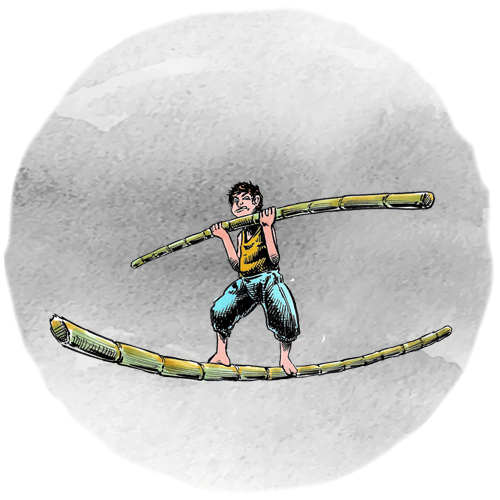
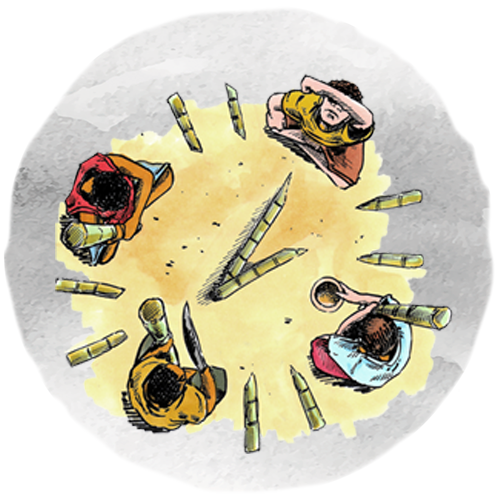
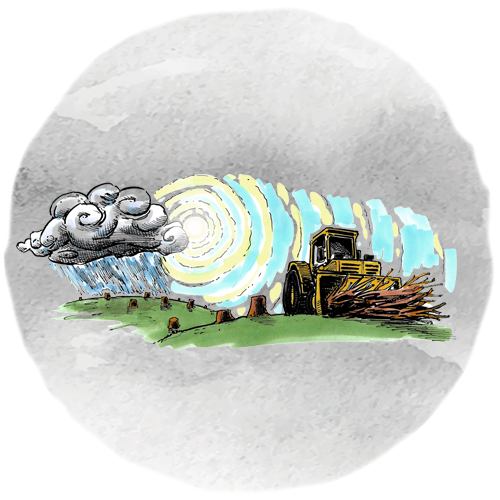
Since its origin, sugar production has been linked to harsh working conditions,
exploitation, abuses and violations of rights.


The ethical solution: the Altromercato sugar production chain
A short supply chain: from the producer directly to us.
High social impact of our fair trade sugar supply chain

WORKING CONDITIONS
Fair compensation, safe workplace conditions and freedom from exploitation.

PRODUCER’S COMPENSATION
It is always safeguarded, even in times of development.

COMMUNITIES RESILIENT
TO CHANGE
Communities inextricably tied to the territory,
self-sufficient for self-consumption.

PRODUCER
EMPOWERMENT
Not Supplier, but
Manufacturer = Partnership
Encourage manufacturers to continuously improve and learn, including on-site training.

CONTINUITY OF INSURANCE
OVER TIME
Copropap: since 1995
PFTC: since 1991
Manduvira: since 2003
MSS: since 2009

ACCESS TO CREDIT
Altromercato supports its producer partners by facilitating their access to credit in order to pre-finance harvests and the purchase of raw materials for production.
Low environmental impact on sugar production areas

SUSTAINABLE PRODUCTION
Highly sustainable cane sugar production, most of it organic.

LOW MECHANIZATION OF
PRODUCTION PROCESSES
Lower impact on the soil due to the high use of labour.

FAMILY FARMING AND
LOCAL DEVELOPMENT
It focuses on the dignity of workers, is sensitive to the issue of food security, generates employment, guarantees a fair income that can be reinvested in the local economy, defends agrobiodiversity and ensures the sustainable use of natural resources.

LOGISTICS
Great attention is also given to sustainability in logistics. Altromercato is committed to having its goods transported in full containers that are optimized in load.

SOIL PROTECTION AND
MARGINAL LAND USE
Agricultural techniques that limit wind and water erosion and improve the protection of soil nutrient content.

VIRGIN LAND REMAINS UNTOUCHED
NO DEFORESTATION OF PRIMARY FORESTS

NEARLY-ZERO CARBON FOOTPRINT
In sugar mills, the biomass from cane waste is used, without the need for other fuel sources.
Our fair trade sugars

Two whole sugars produced with an artisanal method
Both extracted from certified organic cane sugar, they do not undergo any refining during the production process and retain molasses (non-sugar part) which provides the typical characteristics of color and flavor. The processing steps are managed manually in small family mills or mills that bring together several families directly in the sugar production areas.

Organic Mascobado
Origin: Philippines
Whole cane sugar, produced by evaporation following an ancient artisanal method, is rich in mineral salts, iron in particular.
Dark in color and crystalline appearance, it has an intense flavor and a special hint of licorice.

Dulcita Bio
Origin: Ecuador
Whole cane sugar, extracted via an artisanal process that preserves its quality and nutritional richness. The natural presence of molasses gives it its characteristic amber color and a sweet flavor with honeyed notes.
Two centrifuged sugars: produced in large sugar refineries with sophisticated machinery
The crystallization phase takes place in special machines called crystallizers where the cooked mass is seeded with crystals of the desired size. This is followed by the washing and centrifugation of the crystals in order to obtain the desired color. This is followed by the drying phase in dryers.

Organic Picaflor
Origin: Paraguay
Centrifuged sugar, obtained from the juice of sugar cane. Molasses is almost completely eliminated by centrifugation and crystal washing, without the use of chemicals. Amber in colour and a slight hint of honey.

Demerara Bio
Origin: Mauritius
Centrifuged sugar, obtained from the juice of sugar cane. Very large crystals and higher amount of molasses than Picaflor. Its golden color, bright crystalline appearance and rich aroma are due to the molasses that “envelops” the crystals.
Our origins