Does good chocolate exist for everyone?
The ethical fair trade cocoa supply chain that respects people’s rights and the balance of the ecosystem.

Please select English subtitles
The cocoa market
Where does cocoa come from?
Cocoa cultivation takes place mainly in Ghana, Cameroon, Nigeria, Madagascar and Ivory Coast: more than 70% of the world’s cocoa is produced in Ivory Coast and Ghana.
From a botanical point of view, the cocoa plant grows only in warm forest areas,
at a temperature between 20 and 30 degrees, with high rainfall and humidity, in the shade of the so-called “mother plants”, i.e., taller trees that protect cocoa from direct exposure to sunlight and other atmospheric agents with their foliage.
All the producing countries are therefore located in the rainy stretch close to the equatorial belt that crosses Africa, Asia and Latin America.


Where is it consumed?
Europe, the United States, Australia and Asia are not only the countries that consume cocoa from farms in the global south, but also those where the largest chocolate companies are based.
Who consumes the most chocolate?
Those who do the arduous work do not benefit from the resulting product. Africa is home to 73% of the world’s cocoa crops but less than 3% of chocolate is consumed there (a clear imbalance).
Europeans consume half of the world’s chocolate (about 48%), followed by North America (United States 20% and Canada 4%), Asia (15%) and Latin America (9%). Africa, where the majority of cocoa comes from, consumes only 3% of the chocolate and other derivatives produced in the rest of the planet. A figure that is as paradoxical as it is indicative of the current situation in which international trade finds itself.
(Source: Commercio Equo E Solidale, buono per chi lo produce, buono per chi lo consuma, buono per cambiare il mondo. Equo Garantito 2014)

Cocoa cultivation takes place mainly in Ghana, Cameroon, Nigeria, Madagascar and Ivory Coast: more than 70% of the world’s cocoa is produced in Ivory Coast and Ghana.
From a botanical point of view, the cocoa plant grows only in warm forest areas,
at a temperature between 20 and 30 degrees, with high rainfall and humidity, in the shade of the so-called “mother plants”, i.e., taller trees that protect cocoa from direct exposure to sunlight and other atmospheric agents with their foliage.
All the producing countries are therefore located in the rainy stretch close to the equatorial belt that crosses Africa, Asia and Latin America.
Europe, the United States, Australia and Asia are not only the countries that consume cocoa from farms in the global south, but also those where the largest chocolate companies are based.
Those who do the arduous work do not benefit from the resulting product. Africa is home to 73% of the world’s cocoa crops but less than 3% of chocolate is consumed there (a clear imbalance).
Europeans consume half of the world’s chocolate (about 48%), followed by North America (United States 20% and Canada 4%), Asia (15%) and Latin America (9%). Africa, where the majority of cocoa comes from, consumes only 3% of the chocolate and other derivatives produced in the rest of the planet. A figure that is as paradoxical as it is indicative of the current situation in which international trade finds itself.
(Source: Commercio Equo E Solidale, buono per chi lo produce, buono per chi lo consuma, buono per cambiare il mondo. Equo Garantito 2014)
Where cocoa comes from – and where it goes

Environmental and social issues in the cocoa market
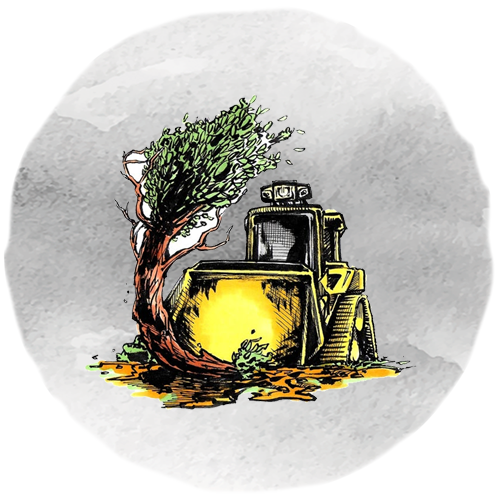
The cultivation and processing of cocoa is linked to many environmental and social issues that seriously undermine the biodiversity of producing countries and the human rights of all those families of farmers. The most serious problems in cocoa production are deforestation and child labour.





The ethical solution: the Altromercato fair trade cocoa supply chain

A supply chain with a high social impact

BETTER WORKING
CONDITIONS
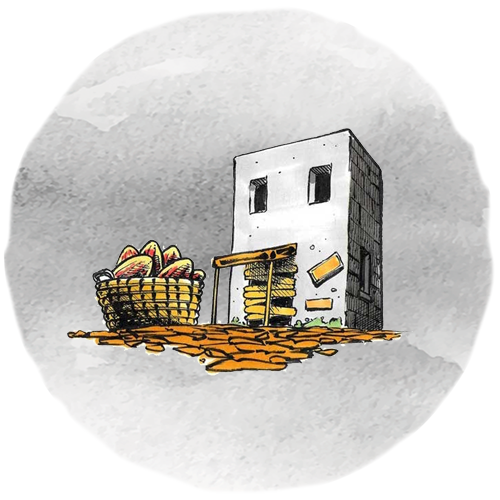
Small farmers organized in cooperatives and associations work without exploitation, with the payment of a fair price, and guaranteed safety conditions in the workplace.

LOWEST PRICE
GUARANTEE
Fair salary agreed with producers and higher than the market compensation. The cocoa producer’s wage is always protected, even at times of promotion.

RESPECT FOR RIGHTS
We protect the human rights of workers involved in the fair trade cocoa production chain.

PRODUCER
EMPOWERMENT
Not supplier, but Manufacturer = Partnership. We encourage producers to improve and learn continuously, including with on-site training.

ADVANCE PAYMENTS AND ACCESS TO CREDIT
We support our producer partners by making it easier for them to access credit to be able to pre-finance fair trade cocoa harvests and the purchase of raw materials for production.

QUALITY OF THE RELATIONSHIP
The relationship with our fair trade cocoa producer partners is one of trade, technical support and cooperation. We establish transparent, continuous and long-lasting business relationships with producers.
A supply chain with a low environmental impact

SUSTAINABLE CULTIVATION
Traditional cocoa cultivation methods mostly use the shade of other trees, which protects the soil from erosion and allows biodiversity to be conserved.

DIVERSIFIED CROPS
It is a diversified cultivation, which involves the sowing of different varieties of plants and trees for the use and consumption of the producing families. The areas are traditionally planted with cocoa and other products, avoiding deforestation.

ORGANIC PRODUCTION
High percentage of cocoa from organic farming. “Premio bio”: an incentive for organic cocoa farming.
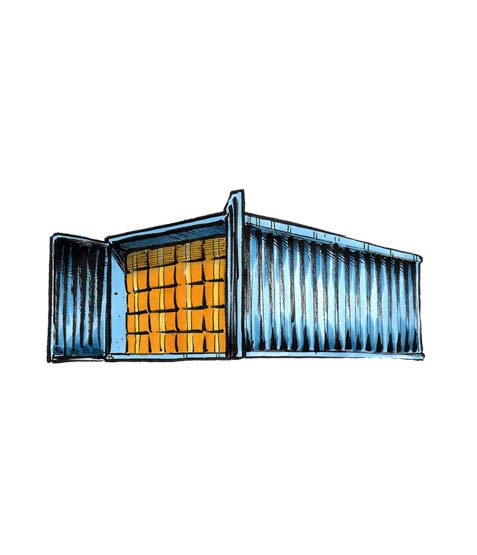
SUSTAINABLE LOGISTICS
Great attention is also given to sustainable logistics. Altromercato is committed to having its goods transported in full load-optimised containers.

SUSTAINABLE PACKS
Altromercato chocolate bar wrappers do not contain aluminium. They are made of paper and plastic that can be disposed of separately. From the expiry date on the package, we can always identify the batch and thus trace the producers and the place where the cocoa comes from.

NON-AGGRESSIVE CULTIVATION
No intensive cocoa cultivation methods are envisaged.
Altromercato organic fair trade cocoa
Altromercato encourages the cultivation of organic cocoa, the one that best respects the environment and supports producers during the conversion of land.

98% of the Altromercato chocolate bars sold are certified organic.
4,300,000
bars of
BIO CHOCOLATE SOLD last year.
In 2019, 58 MILLION
bites of chocolate in organic
bars were enjoyed
by our CONSUMERS.
2,300,000 bars in the
SNACK BIO ALTROMERCATO
format enjoyed by students.
OUR COCOA POWDER IS
ALL ORGANIC.
Our origins
The organization in farmers’ cooperatives makes it possible to obtain better prices and sales conditions throughout the Fairtrade cocoa supply chain.